Inside Algood: Welding – Fusing Workmanship and Quality

Inside Algood is a behind-the-scenes look at how engineering, manufacturing, and people come together to build the casters you rely on. In this issue, we spotlight our injection moulding.


Welding is often an overlooked facet of a finished manufactured caster because, in many applications, welds are never seen once the caster is bolted into place. Yet these hidden joints are what hold the entire rig together and carry the load day after day.

Welding is the process of joining metal components by applying heat until the base materials melt and fuse. During welding, temperatures can exceed 1,500°C, allowing the metals to bond at a molecular level. As the joint cools, the material solidifies into a single continuous structure, which is why a properly executed weld can be as strong as, or stronger than, the original material.

At Algood, welding is integrated into a broader manufacturing workflow. For rigid casters, the process begins with stamping, where legs and top plates are punched. These components are then welded together before moving on to finishing processes such as heat-treating, plating, painting, or curing. Final assembly or coining follows, ensuring each yoke is ready for use.

On swivel casters, legs are welded to the bottom raceways, forming the assembly’s structural base. Additional welding connects kingpinless heads to top plates and legs, and application-specific welds include attaching caster guards or positional locks.
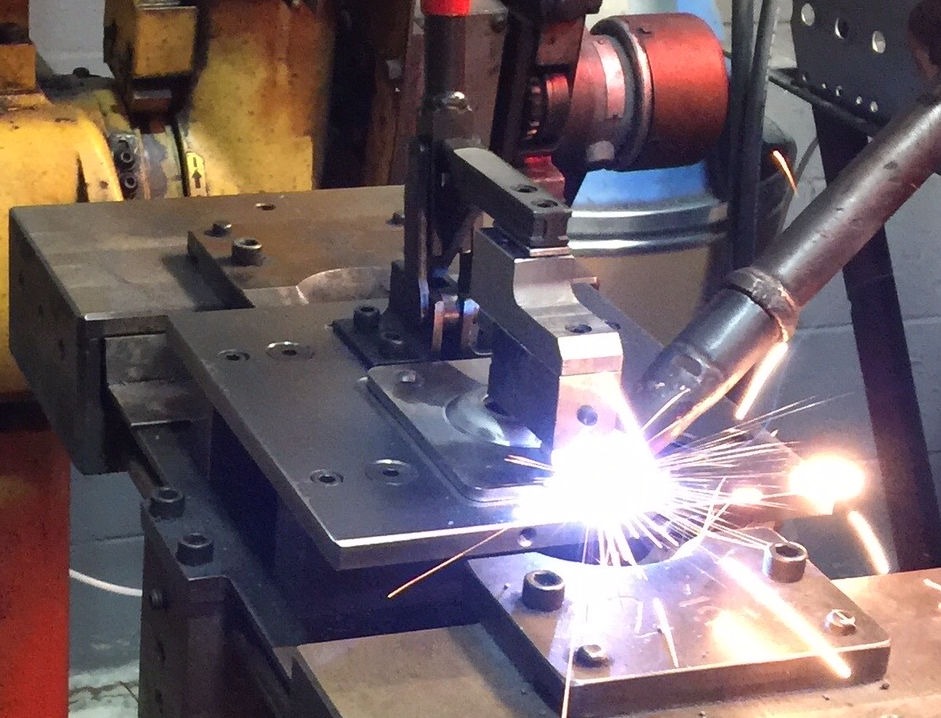
To support both consistency and flexibility, Algood uses a combination of robotic and hand welding. Robotics are used where repeatability and uniformity are critical. Manual welding is reserved for custom or complex assemblies, where experienced welders adjust variables in real time. This includes controlling heat input, travel speed, torch angle, and filler material placement. These adjustments ensure proper weld penetration, minimize distortion, and maintain alignment, especially when working with varying material thicknesses or unique geometries.

Welding techniques are selected based on application requirements. In high-stress areas, double welding is used, meaning multiple welding passes to reinforce the joint and increase load-bearing capacity. Tack welding uses small welds to hold components in position, such as fixing a swivel raceway to effectively convert the caster into a rigid unit. It can also be sufficient for lighter-duty applications where full welds are not required.

An often-overlooked part of the process is post-weld cleanup. During welding, small particles of molten metal known as splatter can adhere to surrounding surfaces. These are removed through wire brushing or chiseling to ensure proper fit, finish, and quality. This step is part of our quality assurance process and contributes to overall product performance.

All welding at Algood is performed in-house, ensuring complete control over quality and consistency. Each weld is evaluated for penetration, uniformity, and its role in the overall structure. The result is casters built with intent, where every joint supports long-term performance and extraordinary quality in real-world applications.
Inside Algood Injection Molding

Inside Algood: Injection Molding

Inside Algood is a behind-the-scenes look at how engineering, manufacturing, and people come together to build the casters you rely on. In this issue, we spotlight our injection moulding.


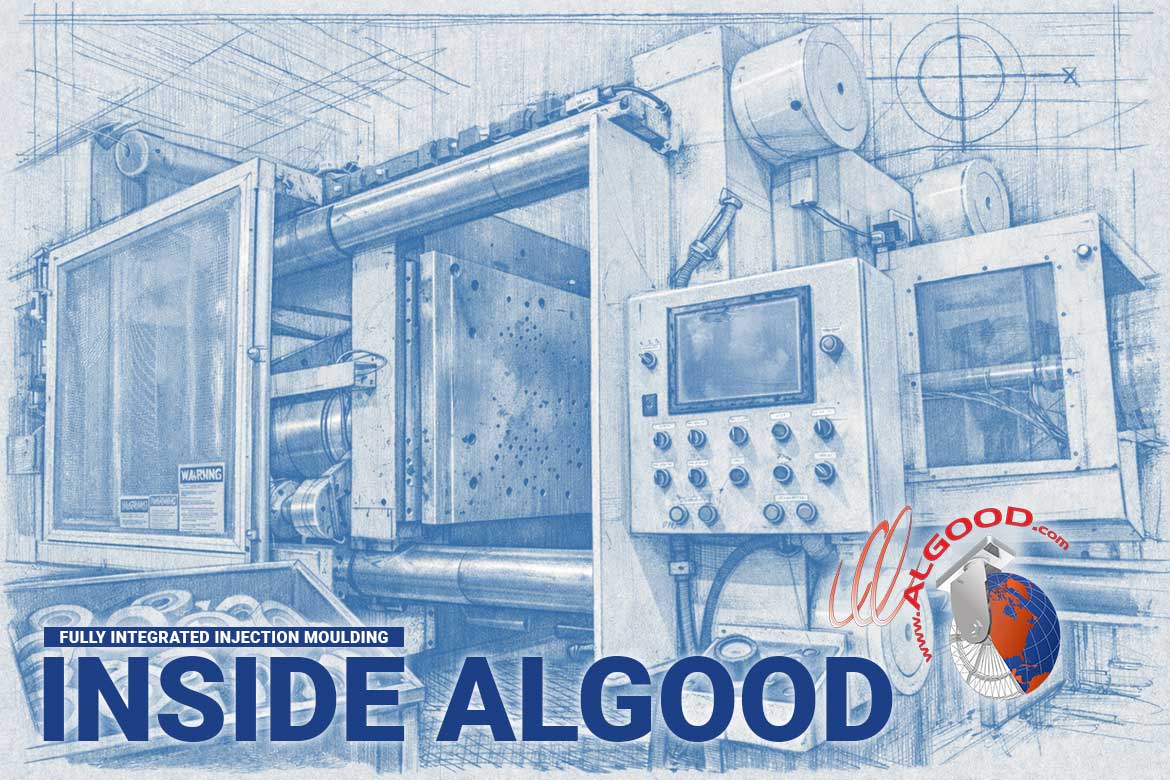
Injection moulding is a key component of Algood’s fully integrated manufacturing facility. From raw material to finished wheel, the process is closely connected to tooling, production, and quality, allowing designs to move efficiently from concept into repeatable production.

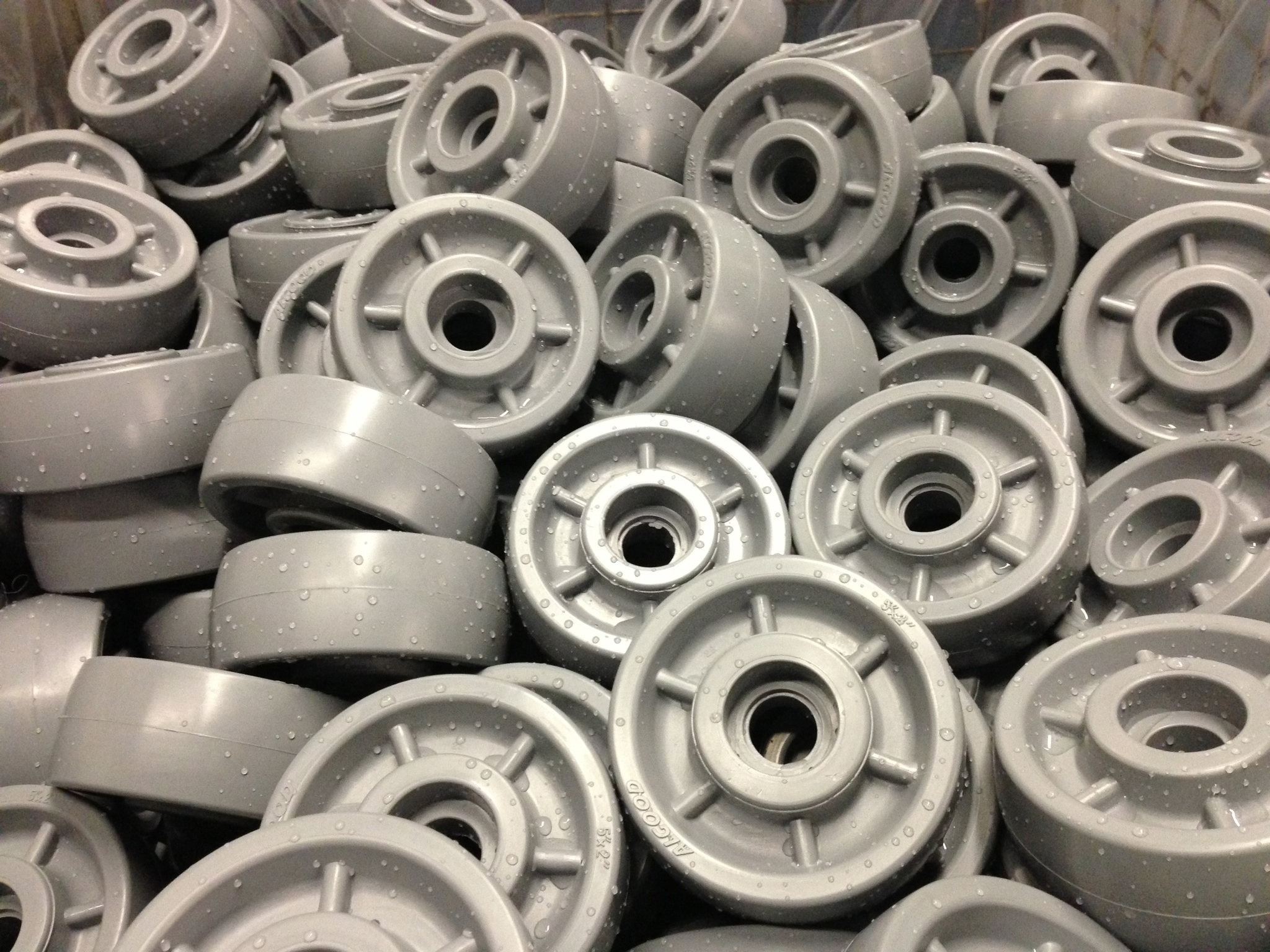
All solid one-piece wheels, expandables, and brakes like the iLock™ are produced internally. These moulded components are designed as part of a complete caster system, with careful attention to how they carry load, interface with metal assemblies, and perform over time. Across the product range, wheels support capacities from 25 pounds to over 10,000 pounds. To meet that range, moulding equipment spans from 150-ton to 1,000-ton machines. Smaller presses are used for lighter-duty wheels and inserts, while higher-tonnage machines form larger wheels in a variety of materials.

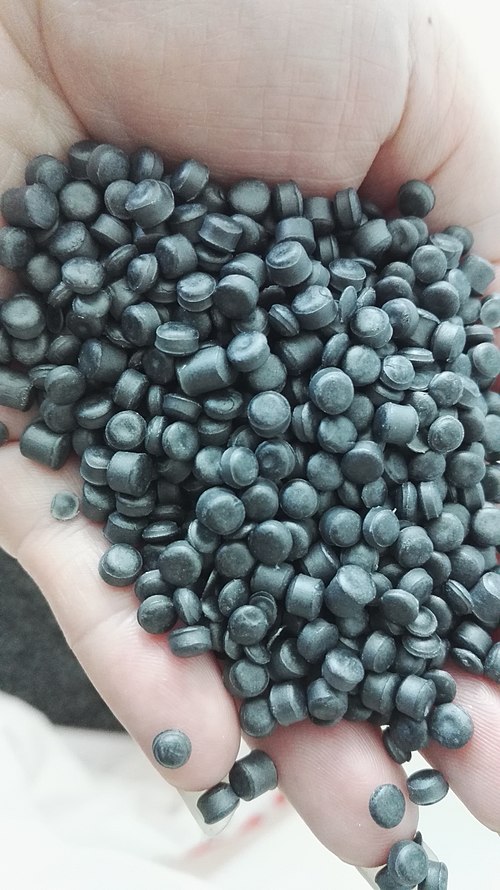
Injection moulding for wheels and plastic inserts is a high-volume process that uses thermoplastics such as ALThane™, Envirothane™, high-temperature Lava™, RollX™ and NyRoll™ materials to produce durable, load-bearing wheels. It involves heating thermoplastic pellets, injecting the molten material into a designed mould cavity under high pressure, cooling to solidify, and then ejecting the finished, precise part. Some materials require additional proprietary treatment to stabilize the part, while others are ready to move directly to the next stage.

Certain specialty wheels require additional precision. In some cases, bearings are integrated directly during moulding, allowing material to bond to the bearing as it forms. Other applications involve pressing bearings into the wheel immediately after moulding to ensure proper bonding and alignment.

All mould bases used for wheels and related components are engineered, designed, and built internally through the tool and die department. This close coordination enables quick adjustments and refinements without relying on external vendors, helping to maintain lead times and production stability.

Moulding operations run continuously to meet demand. Around-the-clock production highlights the importance of controlled processes, consistent oversight, and maximum efficiency. Even excess material produced during the process is reclaimed, reground, and reused when appropriate.

Quality validation extends far beyond appearance. Engineers regularly section wheels to examine their internal structure and material bonding, confirming that performance is incorporated throughout the part, not just on the surface. Final checks assess how moulded components function within the complete caster assembly to guarantee proper fit and reliability.

For customers, all of this happens behind the scenes. What remains visible is reliable performance, dependable load capacity, and wheels built to handle real-world demands with confidence. That’s the Algood advantage.


THE WHOLE YEAR AT A GLANCE

Be sure to request a complimentary 15-month wall calendar (January 2026–March 2027) with your next order. It‘s an invaluable planning tool to help you keep projects, schedules, and key dates in view all year long. Just email service@algood.com.

Inside Algood: The Tool & Die Difference

Inside Algood is a behind-the-scenes look at how engineering, manufacturing, and people come together to build the casters you rely on. In this issue, we spotlight our tool and die centre.


The tool and die centre is a foundational component of Algood’s fully integrated manufacturing facility. In fact, Algood is the only major North American caster manufacturer with an in-house tooling area. Absolutely all our tooling is done onsite, supported by CNC lathing and milling, 3D printers and other sophisticated equipment.

The name “tool and die” reflects two sides of the same craft. Tools hold, guide, and support parts during manufacturing, while dies shape material into precise forms. Both live side by side in this department and are essential. Together, they determine how parts are formed, how repeatable the process is, and how well those parts perform once they become part of a complete caster.

The tool and die department is where raw metal is first shaped into the tools that ultimately form a caster. Long before anything is assembled or tested, this is where the groundwork is laid. The tools and dies built here quietly shape the accuracy, consistency, and reliability of every component manufactured at Algood.

The tool & die area supports metal stamping by developing the forming that leads to yokes and steel components and supports injection moulding processes by creating the moulds for wheels, brakes and all plastic parts.

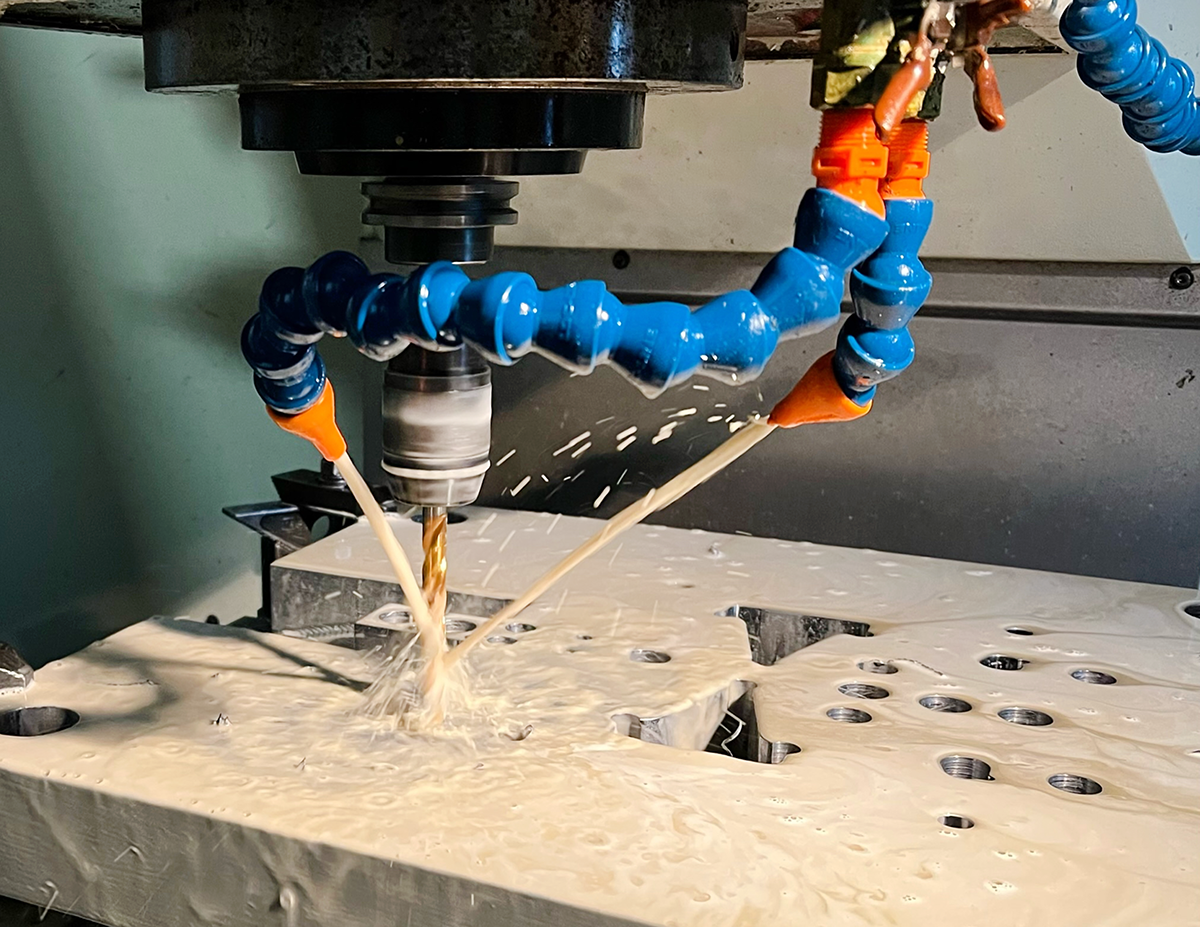
All machining, milling, and CNC tooling work is done in-house. Mould design engineers constantly design and refine moulds for both stamping and injection moulding. Having this capability under one roof means ideas move quickly from concept to reality. When components are being developed, or an adjustment, refinement, or repair is needed, it happens right here and right away. We don’t have to wait for outside vendors or ship tooling there and back. That hands-on control helps keep projects moving and lead times in check.

The integrated tooling area also encourages ongoing internal collaboration. Engineers, toolmakers, and production teams work closely, consulting on the best possible solutions and resolving potential issues before they ever reach the production floor. The focus is on stability and repeatability, building tools and dies that support long production runs.

Our tooling supervisor sees the department as the “mother” of all production because top-notch forming and moulding lead to top-notch casters and components. Tool and die work plays a direct role in quality. Well-built tooling supports tighter control and reduces variation, which is critical for parts that must fit and function together. Having tooling onsite increases responsiveness and minimizes delays. It allows us to guarantee superior quality, attractive lead times and dependable delivery dates.

For customers, this entire operation stays behind the scenes. What they experience is consistent fit, dependable performance, and products that arrive ready to work. Tool and die making may not be visible, but it is critical in guaranteeing the quality our customers have come to expect.


Algood is proud to manufacture its casters and wheels right here in North America. With our fully integrated manufacturing facility in Toronto, we are leaders in quality and innovation. For more information about Algood Casters, Call: 1-800-254-6633 or Email: Service@Algood.com

1 (800) 254-6633
service@algood.com

Algood Casters has manufactured, designed and developed industrial and specialty casters, brakes and wheels since 1969, in capacities from 25 to 65,000 lbs.