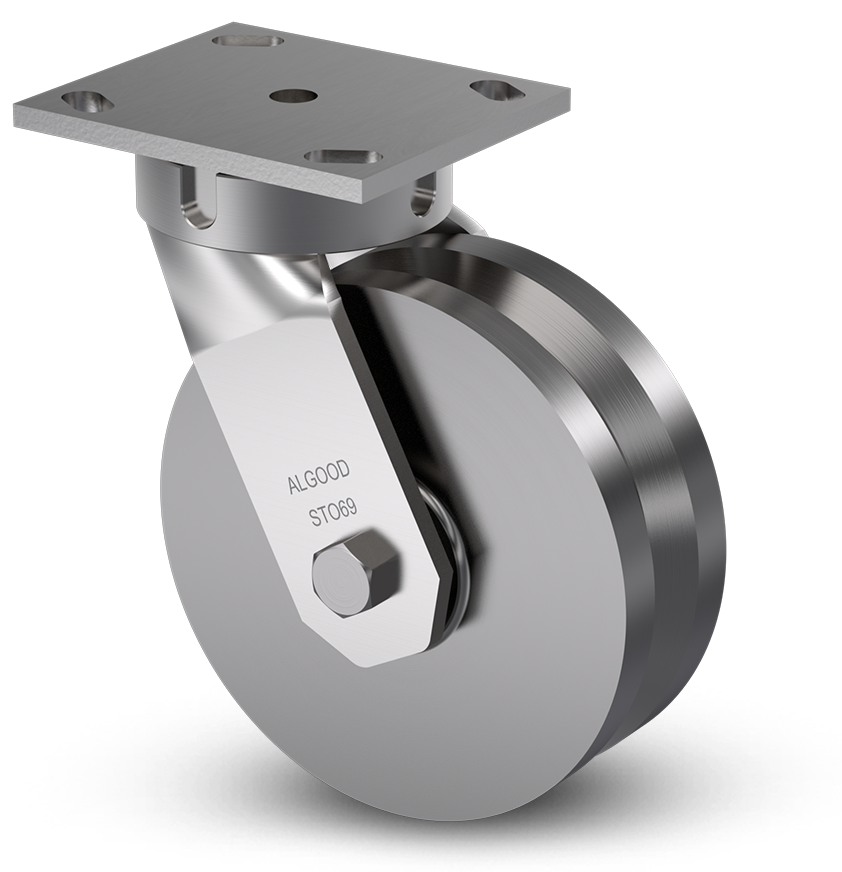
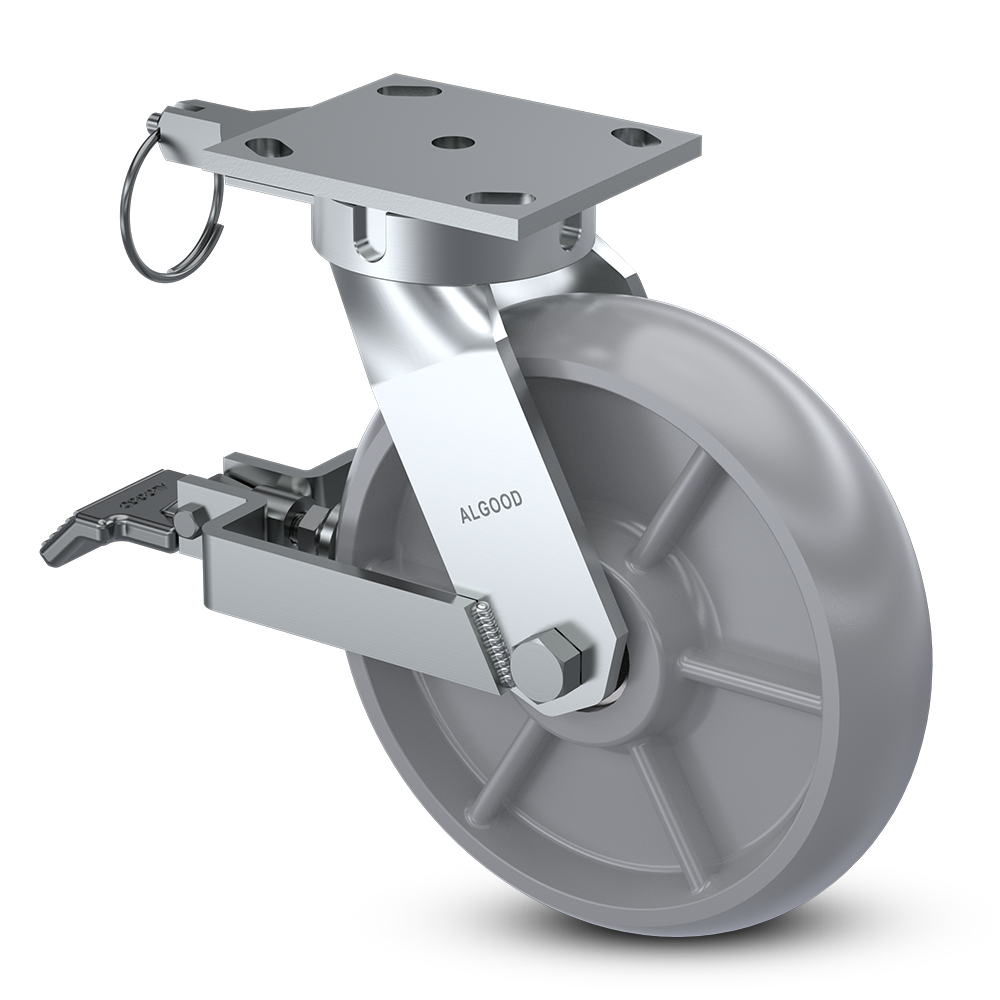
Inside Algood: Metal Stamping

Inside Algood is a behind-the-scenes look at how engineering, manufacturing, and people come together to build the casters you rely on. In this issue, we spotlight our metal stamping capability.


Algood’s metal stamping department stands at the forefront of our commitment to meeting our customers’ needs and of our position as Canada’s largest caster manufacturer. As part of our fully integrated manufacturing facility, our stamping capability is supported by a fleet of presses, including the added capacity of our newly acquired 400-ton press.

Metal stamping is a precise, repeatable manufacturing process that uses presses and dies to transform flat metal into formed caster components. For Algood, this capability allows us to produce high-quality standard and custom parts quickly, efficiently, and consistently.

At its core, metal stamping uses controlled force, carefully engineered tooling, and repeatable press operations to shape metal into defined parts. Depending on the component, the process can include blanking, forming, piercing, embossing, and bending. Each step must be controlled to ensure the finished part meets the required dimensions, geometry, and performance requirements.

Our caster components, including plates, yokes, washers, and thread guards, are stamped internally from hot-rolled steel up to 5/16” thick. Stamping can also be performed using 304 and 316-grade stainless steel.

The dies are at the heart of the metal stamping process, and Algood’s internal Tool and Die Centre gives us direct control over this critical stage. Working from in-house engineering drawings, our tooling team designs, builds, maintains, and modifies dies to achieve the required dimensions, shapes, and features for each stamped component. When adjustments are needed, they can be made quickly in house, without waiting for an outside supplier.

The close connection between engineering, tool and die making, and metal stamping is one of the advantages of the Algood manufacturing environment. Drawings, tooling, die adjustments, and production all happen under one roof. This creates a tighter feedback loop and enables our teams to respond quickly when a part needs refinement, a standard product needs improvement, or a customer requires a custom solution.

By combining in-house tool and die making with metal stamping, we can offer our customers design confidentiality, IP protection, and the ability to conform to their unique requirements. With our stamping presses operating 24 hours a day, we can be responsive to demanding production schedules.

Our metal stamping capability, as part of Algood’s fully integrated approach, supports the speed, accuracy, efficiency, quality, and compliance control our customers demand. Equally important, our continued investment in metal stamping reflects our commitment to the future of North American caster manufacturing.

Caster Mounting Types: Choosing the Right Connection

A caster may be expertly engineered, but if the mounting method is not suited to the load, operating environment, or equipment frame, overall performance will be compromised. The mounting system plays a critical role in transferring forces from the equipment into the caster, maintaining proper alignment, and ensuring long-term stability. It directly influences tracking accuracy, swivel performance, load distribution, and the caster’s ability to hold position reliably throughout its service life.

At Algood, we view caster mounting as an integral part of the overall mobility solution, not just an attachment method. Like the caster itself, the mounting choice should be driven by practical engineering considerations. The objective is to provide a secure connection that keeps the caster stable, properly supports the load, and allows equipment to move safely, smoothly, and predictably. The “right” mounting method is the one that fits the equipment structure, withstands the operating environment, and delivers the required performance with the fewest compromises over the life of the application.

In this issue of CasterU, we provide a primer on common caster mounting types, including where each is best suited and how it can impact caster performance.

Bolt Holes – A mounting pattern where fasteners pass through holes in the caster mounting surface and into the equipment frame.
Best for: Equipment with a flat mounting surface and accessible underside, and applications where the caster needs a firm, permanent connection.
Performance impact: Bolt-hole mounting can deliver excellent stability when the fasteners are correctly sized and tightened. It resists loosening and helps maintain alignment, which supports smoother swivelling and better tracking. In demanding environments, bolt holes also make it easier to service and re-torque hardware during maintenance.

Top Plates – A flat plate at the top of the caster that bolts to the equipment using a bolt pattern.
Best for: Carts, platform trucks, racks, fixtures, and equipment where a broad mounting footprint improves stability.
Performance impact: Top plates distribute load across a larger area of the frame, reducing localized stress. That often translates into a more stable ride, less frame flex at the mounting point, and improved control. If the equipment is subjected to side loads or frequent starting and stopping, a plate mount can help maintain caster alignment and reduce wobble.

Threaded Stems – A threaded post that screws into a matching threaded socket or insert in the equipment.
Best for: Lighter-duty equipment, appliances, displays, and units where a clean, compact mount is preferred.
Performance impact: Threaded stems can provide a secure connection when properly engaged and tightened. Performance depends heavily on thread engagement and the integrity of the receiving socket. If the stem is not fully seated or the threads wear, the caster can loosen and introduce vibration or misalignment, which affects rolling efficiency and steering feel.

Round Stems – A smooth, round post that inserts into a receiving tube or socket, typically held with a retaining method.
Best for: Equipment frames built with tubular legs, and applications where quick installation or replacement is useful.
Performance impact: Round stems can perform very well when the socket fit is correct. A tight fit supports stable tracking and reduces chatter. A loose fit can allow the caster to rotate or shift under load, which affects control and can accelerate wear at the connection point.

Square Stems – A stem with a square profile that fits into a square receiver in the equipment leg.
Best for: Tubular frames where anti-rotation matters, or where the equipment design benefits from a keyed, non-round interface.
Performance impact: Square stems help resist rotation inside the leg, which can improve steering consistency and reduce unwanted movement at the mount. Because the fit is more directional, it can also help keep casters aligned, especially on equipment that gets pushed hard or frequently changes direction.

Expandable Stems – A stem that expands inside the equipment leg when tightened, creating a friction-based grip.
Best for: Tubular legs where drilling is undesirable and fast installation is important, such as light-to-medium equipment, displays, or certain carts and fixtures.
Performance impact: When properly sized to the inside diameter of the leg and correctly tightened, expandable stems can provide a strong hold. Performance depends on maintaining that grip over time. In vibration-heavy use or where loads shift frequently, periodic checks help ensure the mount remains tight and the caster stays aligned.

Hex/Keyway Stems – A stem designed with a hex or keyed geometry that interfaces with a matching receiver to prevent rotation.
Best for: Equipment where torque and side loads could cause a standard stem to slip, or where maintaining consistent caster orientation matters.
Performance impact: These mounts are designed to improve control by resisting rotation at the connection. That typically supports more predictable steering and reduces the chance of the caster “walking” in its mount. For operators, this often feels like steadier tracking and less drift.

Cross Drilled Stems – A stem with a cross hole that allows a pin or fastener to pass through, mechanically locking the stem in place.
Best for: Applications where you want a positive, mechanical retention method rather than friction alone, and where equipment sees movement, shock, or repeated directional changes.
Performance impact: Cross drilled stems can increase security and reduce the risk of pull-out or loosening. Because the connection is mechanically locked, alignment and stability can stay more consistent over the life of the caster, supporting smoother rolling and more reliable control.

Specialty Stems, Mounts and Plates – Custom or non-standard mounting solutions designed around specific equipment geometry, load paths, or environmental requirements.
Best for: Unique equipment frames, retrofits, constrained clearances, unusual load distributions, or applications where off-the-shelf mounting introduces compromises.
Performance impact: Specialty mounts are often where performance gains are won or lost. The right custom mount can improve load distribution, increase stability, solve clearance problems, or support a specific way the equipment is used. When a mount is designed to match real conditions, the caster performs more closely to its intended capability, and the equipment is easier to move and control.

Important Installation Considerations

For bolt-hole and stem-mounted casters, the equipment mounting structure must be designed so that the caster’s top washer, round plate, or mounting shoulder is always firmly seated against the mounting surface. There shouldn’t be any gap between the mounting surface and the caster’s load-bearing mounting interface.

A gap can transfer loads through the stem alone rather than through the intended mounting surface. This leads to stem bending under eccentric loading, significantly increasing stress concentrations and reducing the caster’s load-carrying capacity. The result may be fatigue failure, assembly loosening, or premature caster failure.

Proper installation ensures that loads are transferred through the caster’s designed load path, maximizing strength, stability, and service life.

Choosing the right mount

If you want the simplest rule: choose the mounting method that keeps the caster firmly aligned under your real operating loads and conditions. From there, it becomes an exercise in fit, serviceability, and practicality.

This is where Algood’s approach comes into focus. We are customer-centred, design-focused, and committed to building solutions for real-world applications. Rather than forcing a one-size-fits-all solution, we focus on selecting the mounting method that best supports stability, durability, and reliable caster performance throughout the application’s lifetime.

For help choosing the right mounting type for your application, contact your local Algood representative or a member of our customer service team.


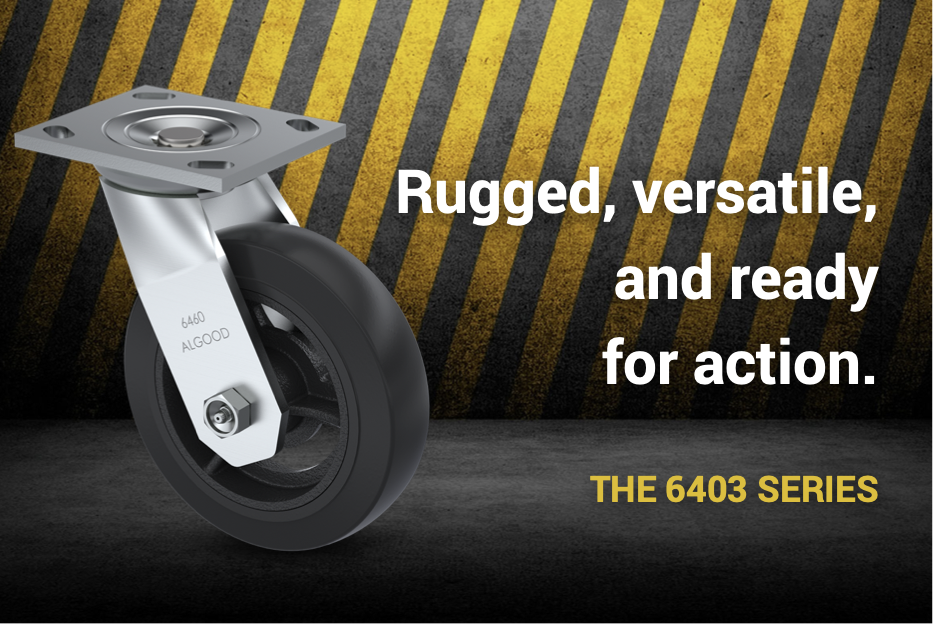
6403 Series: Rugged, versatile, ready for action

6403 Series: S6463-A38H-MR-RB [Zinc Finish]

If you’re looking for a caster that combines high capacity with real-world flexibility, the 6403 Series deserves your attention. It delivers remarkable power and exceptional versatility in a 1-1/2″ tread width caster, backed by superior construction and a wide array of options.

These casters provide engineered construction that performs. They are robotically welded and built with double-raceway construction for outstanding maneuverability. 6403 casters feature a 5/16″ diameter upper race and a 1/4″ diameter lower race, both with hardened steel load bearings. The 5/8″ diameter kingpin is nut and bolt coined.

Available in 3″, 4″, 5″, and 6″ diameters with a maximum capacity of 800 lbs., the 6403 can be paired with a variety of wheels, including PurThane™, Envirothane™, RollX™, and high-temp Lava™. Providing maximum configurability, it is also available with round, threaded, expandable, and metric stems, as well as a wide variety of brakes, plates, and bearings.

Manufactured in our fully integrated facility in Toronto, 6403 casters come in a bright zinc, corrosion-resistant finish and can also be produced in stainless steel. These North American-made casters are available with outstanding lead times, delivery dates you can depend on, and are backed by our 3-year No-Excuse Warranty.

The 6403 is designed to handle rugged applications, uneven surfaces, and outdoor use. It works well with forklifts, light towlines, large stock carts, medium-duty platform trucks, and small garbage bins. It can also be used for food service equipment and hospitality settings. When made of stainless steel, it is a strong option for clean environments such as healthcare, pharmaceuticals, food processing, and high-tech industries.

To find out more about this industry-leading caster and select the right configuration for your equipment and environment, contact your local Algood representative or a member of our customer service team.

Algood is proud to manufacture its casters and wheels right here in North America. With our fully integrated manufacturing facility in Toronto, we are leaders in quality and innovation. For more information about Algood Casters, Call: 1-800-254-6633 or Email: Service@Algood.com

Inside Algood: Welding – Fusing Workmanship and Quality

Inside Algood is a behind-the-scenes look at how engineering, manufacturing, and people come together to build the casters you rely on. In this issue, we spotlight our injection moulding.


Welding is often an overlooked facet of a finished manufactured caster because, in many applications, welds are never seen once the caster is bolted into place. Yet these hidden joints are what hold the entire rig together and carry the load day after day.

Welding is the process of joining metal components by applying heat until the base materials melt and fuse. During welding, temperatures can exceed 1,500°C, allowing the metals to bond at a molecular level. As the joint cools, the material solidifies into a single continuous structure, which is why a properly executed weld can be as strong as, or stronger than, the original material.

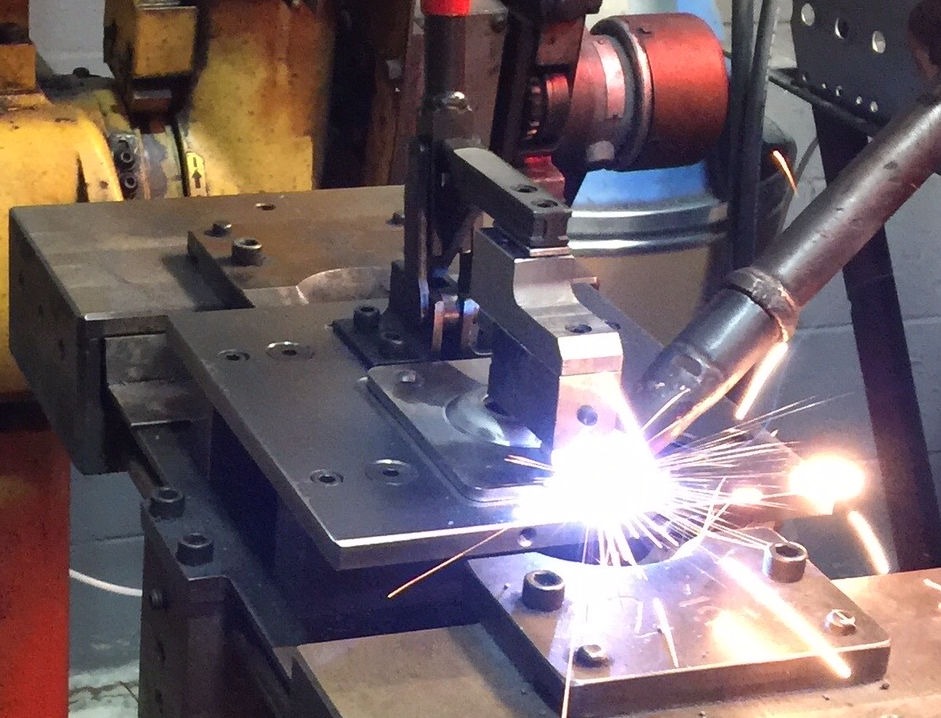
At Algood, welding is integrated into a broader manufacturing workflow. For rigid casters, the process begins with stamping, where legs and top plates are punched. These components are then welded together before moving on to finishing processes such as heat-treating, plating, painting, or curing. Final assembly or coining follows, ensuring each yoke is ready for use.

On swivel casters, legs are welded to the bottom raceways, forming the assembly’s structural base. Additional welding connects kingpinless heads to top plates and legs, and application-specific welds include attaching caster guards or positional locks.

To support both consistency and flexibility, Algood uses a combination of robotic and hand welding. Robotics are used where repeatability and uniformity are critical. Manual welding is reserved for custom or complex assemblies, where experienced welders adjust variables in real time. This includes controlling heat input, travel speed, torch angle, and filler material placement. These adjustments ensure proper weld penetration, minimize distortion, and maintain alignment, especially when working with varying material thicknesses or unique geometries.

Welding techniques are selected based on application requirements. In high-stress areas, double welding is used, meaning multiple welding passes to reinforce the joint and increase load-bearing capacity. Tack welding uses small welds to hold components in position, such as fixing a swivel raceway to effectively convert the caster into a rigid unit. It can also be sufficient for lighter-duty applications where full welds are not required.

An often-overlooked part of the process is post-weld cleanup. During welding, small particles of molten metal known as splatter can adhere to surrounding surfaces. These are removed through wire brushing or chiseling to ensure proper fit, finish, and quality. This step is part of our quality assurance process and contributes to overall product performance.

All welding at Algood is performed in-house, ensuring complete control over quality and consistency. Each weld is evaluated for penetration, uniformity, and its role in the overall structure. The result is casters built with intent, where every joint supports long-term performance and extraordinary quality in real-world applications.

7 Caster Maintenance Checks to Keep Equipment Moving

Casters don’t usually fail without warning. They wear, loosen, bind, or misalign long before they stop rolling. A simple maintenance routine can reduce rolling resistance, protect floors, extend wheel and bearing life, and prevent avoidable downtime. Here are 7 practical checks your team can perform to protect your caster investment and keep performance smooth, stable, and under control.

  1. Install casters properly
    • Use lock nuts or washers to secure casters
    • Ensure expanding adapters are firmly fitted.
  2. Clean casters and surfaces
    • Remove debris, dust, and dirt from wheels and bearings
    • Use thread guards in high-debris environments.
  3. Lubricate correctly
    • Lubricate wheel and swivel bearings regularly using suitable grease.
    • For unsealed roller bearings, use a high-quality multi-purpose grease
    • On zerk fittings, use a grease gun and lubricate until you see fresh grease emerge.
    • Adjust lubrication frequency based on conditions—typically every six months or more often in harsh environments.
  4. Tighten and verify hardware
    • Frequently check and tighten axle nuts, mounting bolts, and king bolts to prevent misalignment and premature wear.
    • If casters are welded to equipment, check the welded elements for cracks
  5. Inspect for damage and rollability
    • Look for flat spots on wheels, rust, or damage to the caster housing.
    • Check frames for distortion due to overloads or impact loads
    • Inspect cart or equipment frames for metal fatigue cracks
  6. Avoid overloading
    • Do not exceed load capacity and
    • Avoid overloading or dropping loads (shock loading) to prevent sudden failure.
  7. Maintain and monitor usage
    • Replace worn components promptly
    • Check brakes and swivel function
    • Keep replacement wheels and bearings on hand to avoid costly downtime

At Algood, we’re here to help. If you’re running into caster performance issues, our customer service team is ready to work alongside you, starting with the real-world details of your load, environment, and use case. Because we manufacture in North America in a fully integrated facility that brings engineering, design, and testing under one roof, we can develop practical solutions you can trust, whether that means dialling in a standard configuration or creating a custom approach. And if you’d like to explore options on your own, our CAD LAB™ modelling platform lets you test configurations and share your results in a variety of formats.

ALG-Blog-Product-Monsoon-Series-01

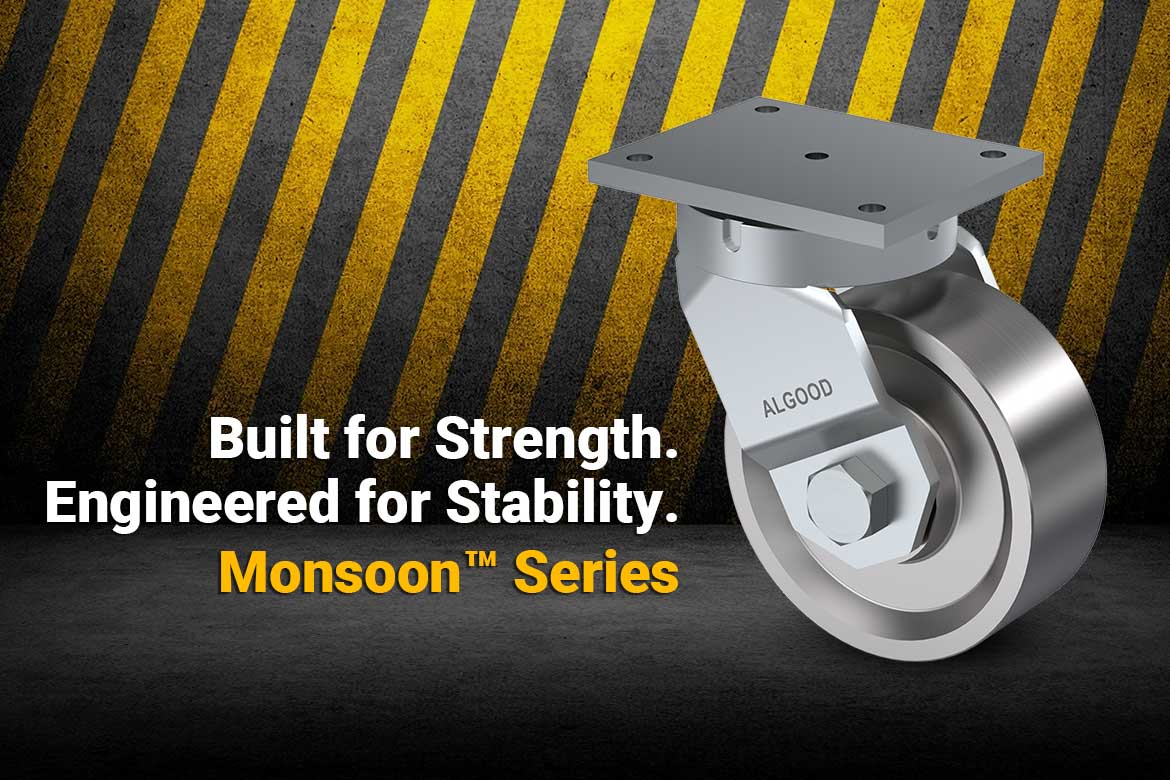
Monsoon: Built for Strength. Engineered for Stability.

Monsoon Series: SMO83-A63L-FSR-TB [Black Ionic]

This unique caster has been designed and engineered to deliver 15,000 lbs of capacity in a kingpinless double-raceway configuration that provides exceptional stability. The Monsoon™ features a heavy-duty proprietary swivel head design that eliminates the kingpin, a traditional stress point that can loosen or fail under shock, impact, and heavy loads. Without a kingpin to deform or break, the Monsoon delivers greater structural integrity and dependable performance in severe heavy-duty applications.

This kingpinless caster head features a 5” raceway above a 3” raceway, with 5/8” and 1/2” diameter hardened steel ball bearings, respectively. The top raceway absorbs direct downward thrust, while the bottom raceway manages horizontal forces. Together, the two raceways function like a tapered bearing, allowing greater lateral movement while handling more severe loads.

Engineered for performance, the rig features continuously welded legs for added strength. A standard corrosion-resistant bright zinc finish enhances both protection and appearance, with other optional finishes also available.

Monsoon Series: SMO83-A63L-FSX2-TB [Zinc Finish]

The Monsoon is available in 6”, 8”, 10”, and 12” diameters with larger sizes available and tread widths of 3” and 4”. It can be configured with a range of brake options, including the PolyCam Brake (PCB), Universal Wheel Brake (UWB) and 4-position swivel lock (4PSL). Tapered or roller bearings are available on both swivel and rigid casters, along with options such as spring-loaded and dual-wheel configurations.

You can bring these configuration options to life using our CAD LAB™ caster modelling platform. Build your Monsoon solution by selecting sizes, wheels, and brakes to match your application, then export your configuration in a range of engineering file formats. Buyers, engineers, and operations leaders can move quickly without back-and-forth, benefiting from clean selection, accurate geometry, and full compatibility.

This heavyweight bestseller is produced in our integrated manufacturing facility in Toronto, delivering reliable lead times, dependable delivery dates, and high-quality North American manufacturing backed by our 3-year No-Excuse Warranty™. Many accompanying wheels, including RollX™ and NyRock™, are also manufactured in-house at Algood.

Built for demanding applications up to 15,000 lbs, the Monsoon Series is trusted across industries including tow lines, heavy service equipment, aircraft engine stands, ground support equipment, portable dollies, and die and tooling fixtures. Wherever stability, strength, and kingpinless performance are critical, the Monsoon delivers.


Algood is proud to manufacture its casters and wheels right here in North America. With our fully integrated manufacturing facility in Toronto, we are leaders in quality and innovation. For more information about Algood Casters, Call: 1-800-254-6633 or Email: Service@Algood.com

Inside Algood Injection Molding

Inside Algood: Injection Molding

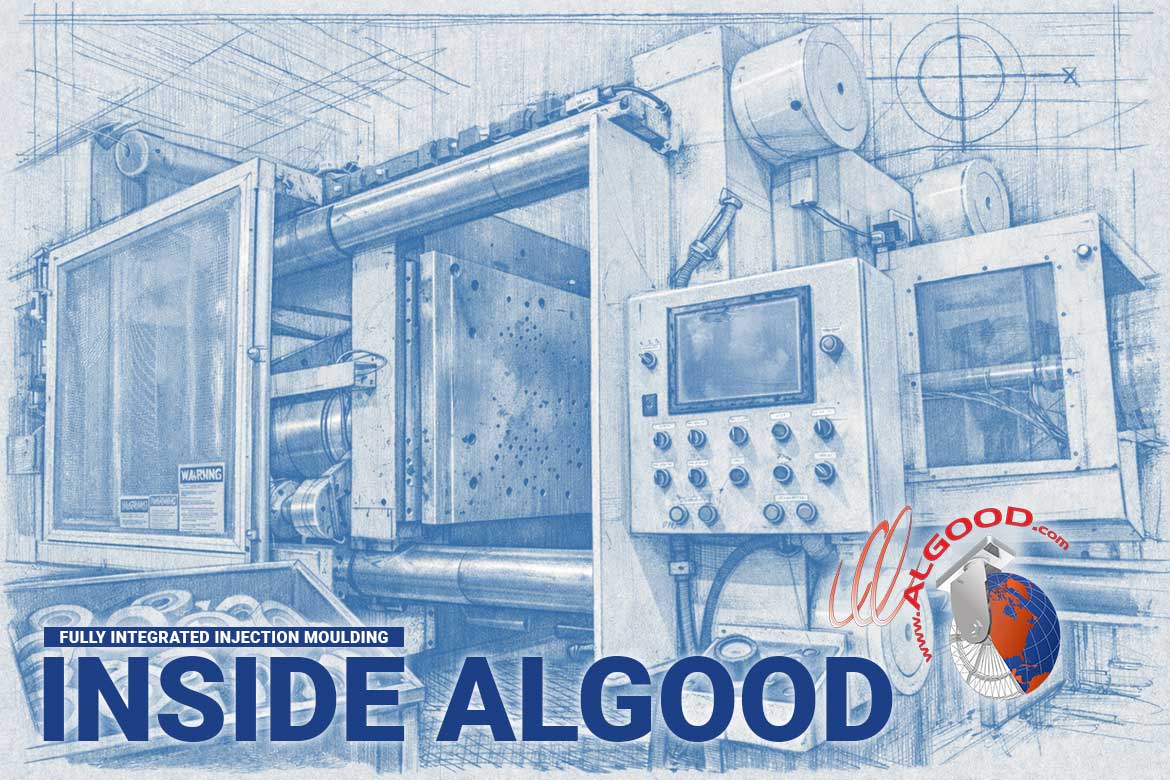
Inside Algood is a behind-the-scenes look at how engineering, manufacturing, and people come together to build the casters you rely on. In this issue, we spotlight our injection moulding.


Injection moulding is a key component of Algood’s fully integrated manufacturing facility. From raw material to finished wheel, the process is closely connected to tooling, production, and quality, allowing designs to move efficiently from concept into repeatable production.

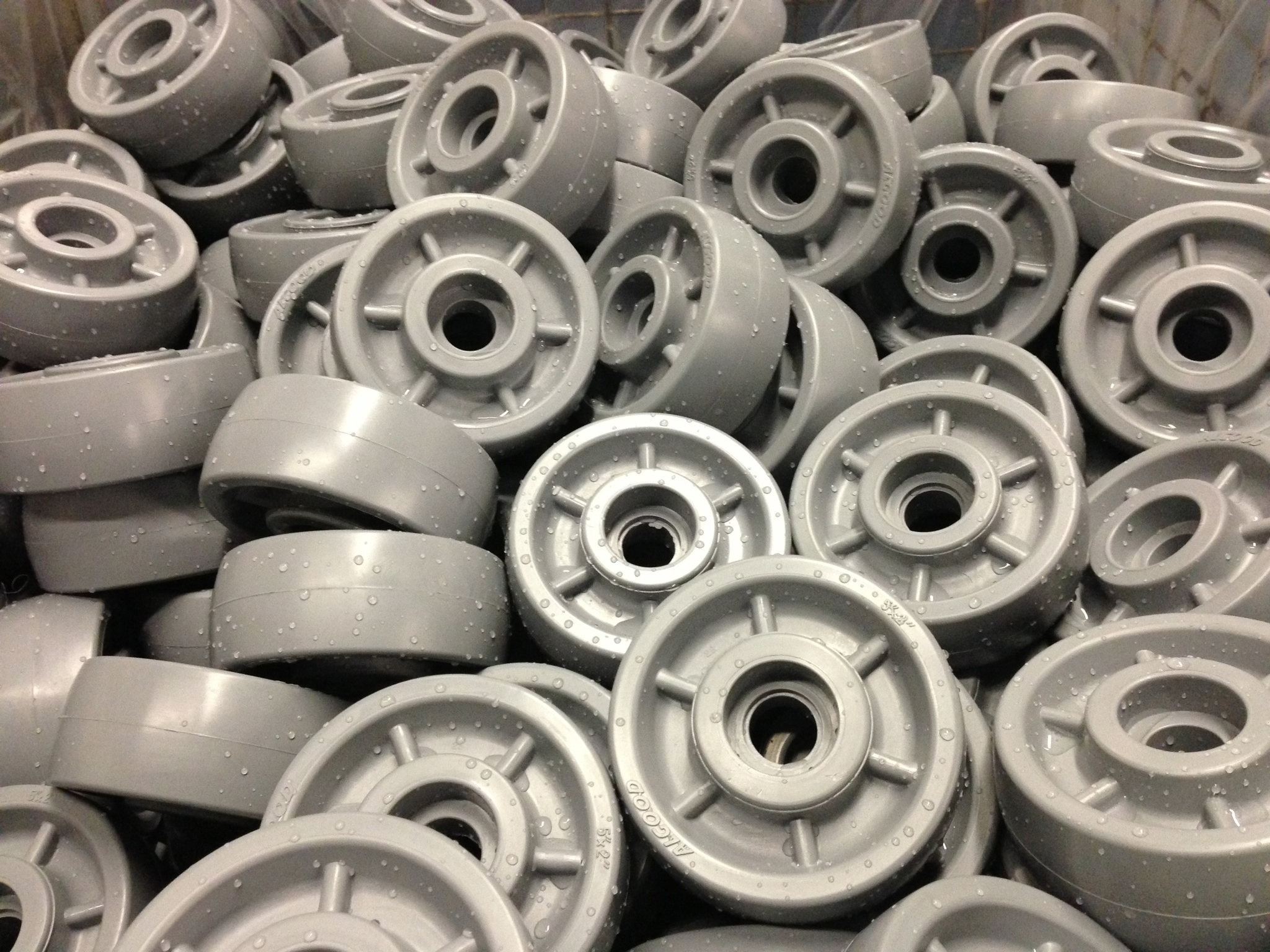
All solid one-piece wheels, expandables, and brakes like the iLock™ are produced internally. These moulded components are designed as part of a complete caster system, with careful attention to how they carry load, interface with metal assemblies, and perform over time. Across the product range, wheels support capacities from 25 pounds to over 10,000 pounds. To meet that range, moulding equipment spans from 150-ton to 1,000-ton machines. Smaller presses are used for lighter-duty wheels and inserts, while higher-tonnage machines form larger wheels in a variety of materials.

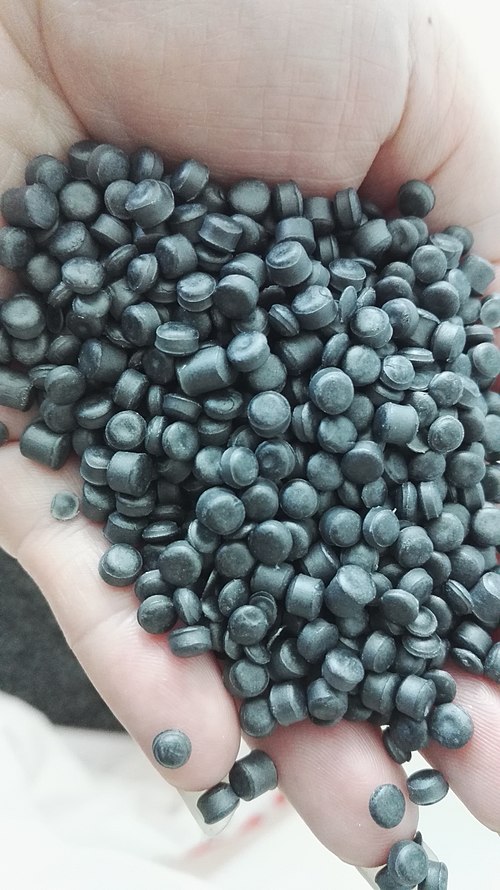
Injection moulding for wheels and plastic inserts is a high-volume process that uses thermoplastics such as ALThane™, Envirothane™, high-temperature Lava™, RollX™ and NyRoll™ materials to produce durable, load-bearing wheels. It involves heating thermoplastic pellets, injecting the molten material into a designed mould cavity under high pressure, cooling to solidify, and then ejecting the finished, precise part. Some materials require additional proprietary treatment to stabilize the part, while others are ready to move directly to the next stage.

Certain specialty wheels require additional precision. In some cases, bearings are integrated directly during moulding, allowing material to bond to the bearing as it forms. Other applications involve pressing bearings into the wheel immediately after moulding to ensure proper bonding and alignment.

All mould bases used for wheels and related components are engineered, designed, and built internally through the tool and die department. This close coordination enables quick adjustments and refinements without relying on external vendors, helping to maintain lead times and production stability.

Moulding operations run continuously to meet demand. Around-the-clock production highlights the importance of controlled processes, consistent oversight, and maximum efficiency. Even excess material produced during the process is reclaimed, reground, and reused when appropriate.

Quality validation extends far beyond appearance. Engineers regularly section wheels to examine their internal structure and material bonding, confirming that performance is incorporated throughout the part, not just on the surface. Final checks assess how moulded components function within the complete caster assembly to guarantee proper fit and reliability.

For customers, all of this happens behind the scenes. What remains visible is reliable performance, dependable load capacity, and wheels built to handle real-world demands with confidence. That’s the Algood advantage.


THE WHOLE YEAR AT A GLANCE

Be sure to request a complimentary 15-month wall calendar (January 2026–March 2027) with your next order. It‘s an invaluable planning tool to help you keep projects, schedules, and key dates in view all year long. Just email service@algood.com.

Algood Product Spotlight: 304 and 316 Stainless Steel Caster Series

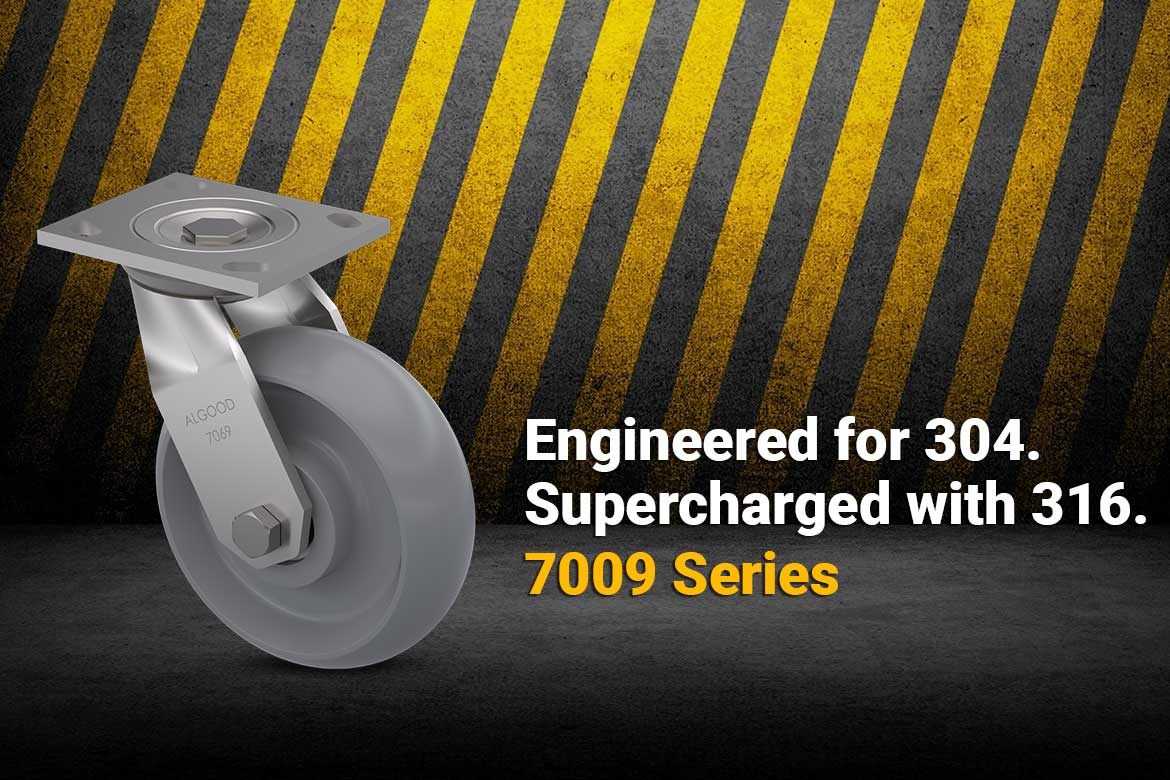
Engineered with 304 Stainless: Supercharged with 316

7009 Series: S7069-A38H-PTN-PBSS [Stainless Finish]

In many demanding environments, durability, control, and corrosion resistance are non-negotiable. That’s exactly where the 7009 Series caster excels. Rugged and versatile, it pairs sleek lines with welded construction to deliver 1,250 lbs of heavy-duty power and it’s produced using work-hardened, electro-polished, and de-magnetized SAE 304 stainless steel.

At the core of the 7009’s performance is its double-raceway construction, engineered to deliver outstanding maneuverability without compromising strength. A 5/8″-diameter nut-and-bolt-coined kingpin adds stability and durability, supporting consistent performance where it matters most.

Just as important, this caster’s construction is designed to meet real-world specification requirements. It can be engineered to customize overall heights and swivel leads to meet specific application demands, and it can be produced with dual or even tri-wheel configurations. Built entirely from stainless steel including stainless rollers, precision or ball bearings, and multiple brake configurations for enhanced control. This series can also be manufactured in 316 stainless steel for environments requiring an elevated level of corrosion resistance.

7009 Series: S7069-A38H-NYNW-RB [Stainless Steel Finish]

Manufactured in our fully integrated North American facility, every 7009 Series Caster is engineered, stamped, and welded under one roof, delivering consistent quality, reliable lead times, and the confidence of trusted craftsmanship backed by our 3-year No Excuse Warranty™.

Our engineering approach is especially valuable in environments where hygiene and corrosion resistance are critical, including healthcare, pharmaceuticals, high tech, and food processing. The 7009 can be supercharged using 316 stainless steel an ideal upgrade for facilities with strict hygiene and cleanliness standards that combine strong disinfectants with high temperatures to prevent contamination, and for production facilities requiring a contaminant-free environment.

In composition, 316 stainless steel includes 16% chromium, 10% nickel, and 2% molybdenum. Compared with 304, it has a little more nickel and a little less chromium, but the key difference is molybdenum, which is used to strengthen and harden steel. This higher molybdenum content greatly enhances corrosion resistance, providing superior protection against chlorides and acids.

To help you spec the right build faster, our CAD LAB™ configurator makes it easy to explore all the 7009 configurations.

If you’re looking for a stainless-steel caster engineered for strength, versatility, and maneuverability and with the possibility of an upgrade to 316 stainless steel, you need to know more about the 7009. Contact your local Algood representative or a member of our customer service team.
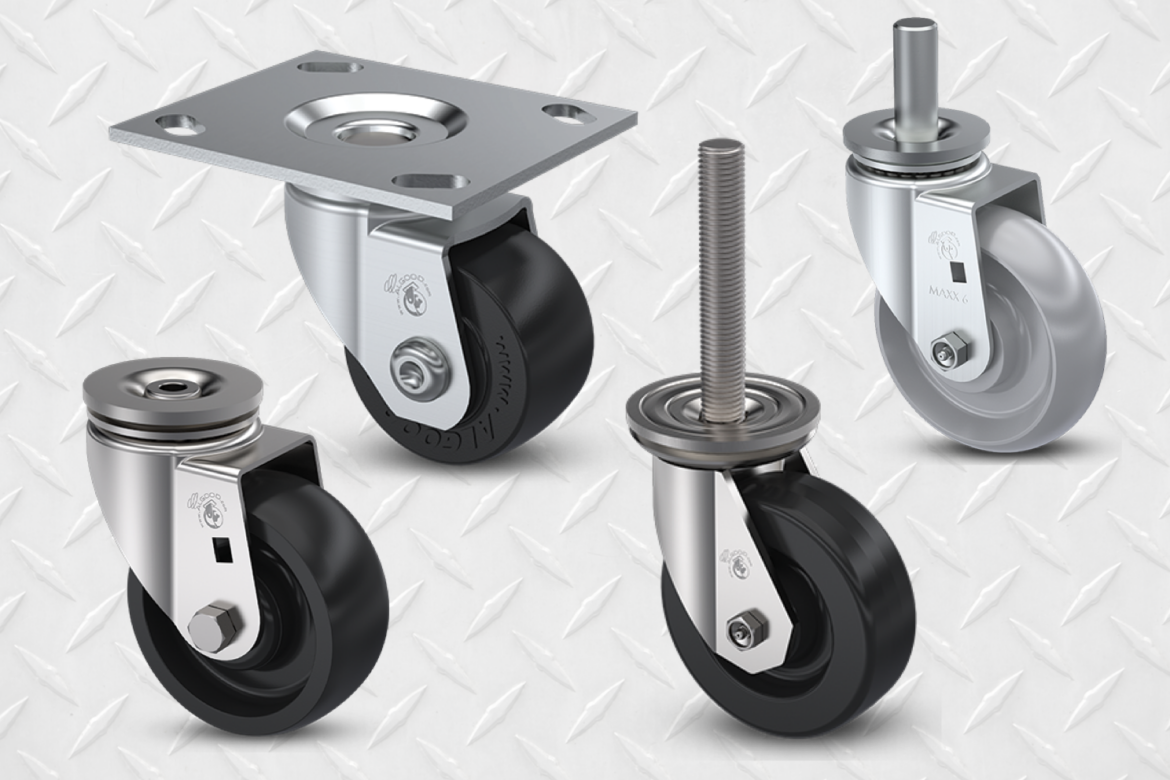

Algood is proud to manufacture its casters and wheels right here in North America. With our fully integrated manufacturing facility in Toronto, we are leaders in quality and innovation. For more information about Algood Casters, Call: 1-800-254-6633 or Email: Service@Algood.com

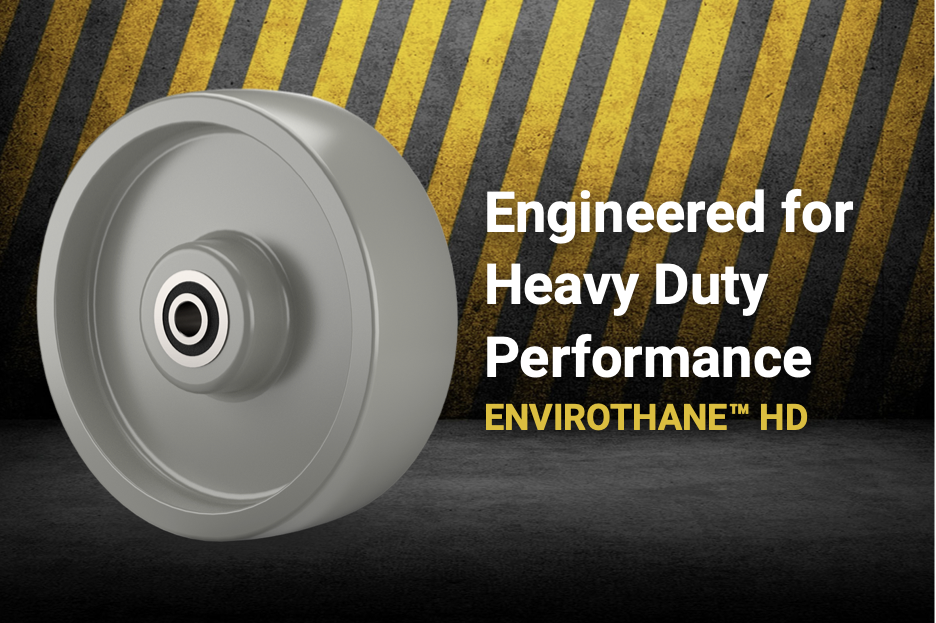
Engineered for Heavy Duty Performance: Envirothane™ HD

When a wheel becomes a bestseller, many caster manufacturers would let it ride. But at Algood, engineering momentum matters—because your operating reality keeps changing. Loads increase. Equipment gets more expensive. Downtime becomes less tolerable. And components need to work harder in tighter, tougher environments.

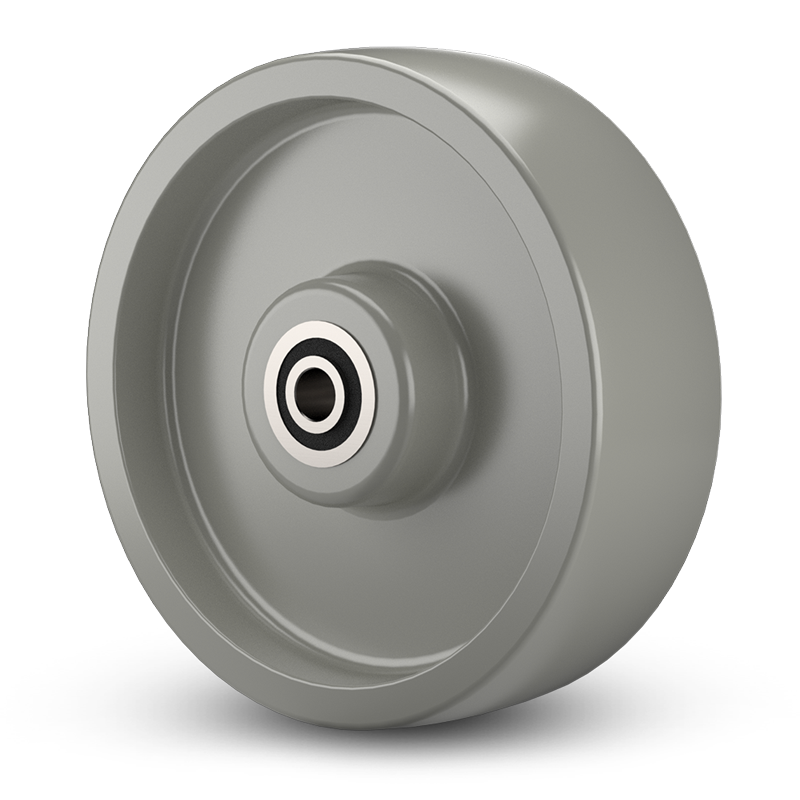
That’s why we took the winning formula behind our original Envirothane™ wheel, known for its one-piece construction and outstanding performance, and re-engineered it to meet new requirements: higher capacity, broader application use, and compatibility with our kingpinless caster platforms. The result is Envirothane HD™—built to help operations teams protect uptime while giving engineers the design characteristics they want.

Envirothane HD is engineered for up to 3,600 lbs of capacity while maintaining outstanding maneuverability, making it an ideal match for our Tornado™, Tornado9™, Twister™, and Typhoon™ kingpinless casters. It’s designed to perform indoors or outdoors, protect floors, and stay reliable with maintenance-free operation—so your team can focus on throughput, not wheel upkeep.

All production for this high-performance wheel takes place at our fully integrated manufacturing facility in Toronto. You get competitive lead times and dependable delivery dates, with North American-quality backed by our 3-Year No Excuse Warranty™.

Engineering features with real operational payoff

Here are the design and material choices behind Envirothane HD—and why they matter in the field:

  • Injection moulded, one-piece construction to help eliminate core separation, providing durability you can count on
  • Sizes that spec easily: 3” to 12” diameters with 2″, 2-1/2”, and 3″ tread widths
  • Non-marking for better facility appearance and floor care outcomes
  • 80D durometer with memory retention to help prevent flat spotting (especially helpful after static loading)
  • Moisture-friendly and chemical-resistant for environments that punish standard wheel materials
  • Fully compatible with stainless steel casters
  • Temperature range: -45ºF to 200ºF, supporting outdoor use and temperature swings
  • NSF approved and pairs well with stainless steel casters for hygiene-sensitive applications
  • 100% recyclable, supporting more responsible material choices
  • Crowned tread to increase maneuverability (particularly useful when loads are high)
  • Maintenance-free, long-lasting, helping extend the service life of equipment

We encourage teams to use our CAD LAB modelling platform to build an Envirothane HD solution that matches your application needs—wheel size, tread width, caster pairing, and more—and then render that configuration in the format that is best for you. For buyers and operations leaders, you can get the right wheel quickly, without back-and-forth, while engineers get about clean selection, correct geometry, and compatibility.

Envirothane HD is suitable for a wide range of applications, including harsh and abrasive conditions, and supports operations across:

  • Pharmaceutical, healthcare, food production, hospitality, and high-tech environments
  • Heavy material handling, factory settings, and towline applications

If you’re balancing load capacity, maneuverability, floor protection, and long-term durability, Envirothane HD is built for that exact trade space.


Algood is proud to manufacture its casters and wheels right here in North America. With our fully integrated manufacturing facility in Toronto, we are leaders in quality and innovation. For more information about Algood Casters, Call: 1-800-254-6633 or Email: Service@Algood.com

Algood Product Spotlight: Spring Loaded Caster Series

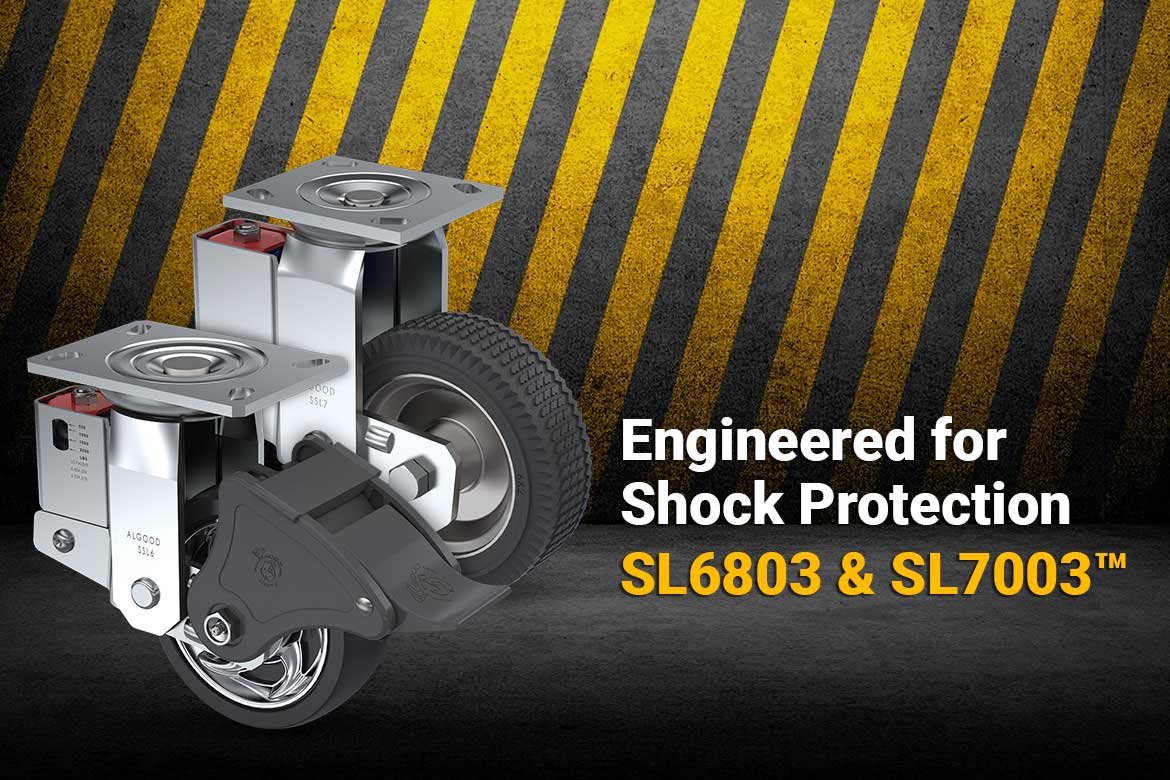
SL6083 and SL7003: Engineered for Shock Protection

SL6803 Series: SSL6863-A47H-RXW-PB-TG-iLKW-C [Zinc Finish]

When sensitive loads include heavy weights, shock becomes a real threat. The SL6803 and SL7003 Series spring-loaded casters are engineered specifically to manage that risk, delivering controlled motion, shock isolation, and consistent load distribution where other casters fall short.

Both series follow the same engineering philosophy and are designed as fully integrated systems, not accessories. Impact is absorbed within the caster assembly itself, preventing vibration and sudden shock forces from being transmitted to equipment or cargo.

The SL7003 Series delivers this performance in a more compact footprint, while the SL6803 Series scales the same design principles into higher load ranges with increased structural mass. The SL6803 has a capacity of 1,500 lbs., while the SL7003 can handle up to 1,000 lbs. Both feature double-welded construction for added strength and are engineered to maintain continuous floor contact across uneven surfaces, keeping all wheels engaged and loads evenly shared.

SL7003 Series: SSL7064I-A38H-PTN-PB-iLKW-A [Black Ionic Finish]

At the core of both designs is a multi-spring architecture that allows performance to be tuned through spring selection. Each series is available with different spring types, enabling engineers to precisely match load capacity and deflection characteristics. As loads increase, heavier spring configurations provide greater deflection control, absorbing shock without bottoming out and maintaining system stability under dynamic conditions. Our patented load indicator displays the amount of weight being borne by the springs.

The SL6803 and SL7003 Series have now been added to Algood’s CAD LAB™, reflecting some of the most technically advanced builds ever released in our CAD modelling. Engineers and designers gain immediate access to accurate, configurable CAD models, streamlining design validation, accelerating approvals, and facilitating the specification process.

Within the CAD LAB™, both series can be configured in dozens of variations, with over two dozen wheel options, including RollX™, ProTech™, and Envirothane™, as well as multiple plate, stem, and bearing configurations. Braking options range from the iLock™ wheel-only solution to multi-position swivel locks and the integrated Universal Wheel Brake (UWB), a positive-lock brake welded directly to the caster fork. With the UWB, brake force, engagement angle, and braking point are fully adjustable, with smooth engagement requiring as little as 15 lbs. of pressure.

Manufactured in our fully integrated Toronto facility, the SL6803 and SL7003 Series offer dependable lead times measured in weeks, delivery dates you can count on, and trusted North American quality backed by our 3-Year No Excuse Warranty™. And when customization matters, there is direct access to engineering expertise.

Potential applications for these superbly constructed casters include mobile motion picture staging, aircraft ground support equipment, in-plant trailer parts, trash containers, tool carts, amusement parks, asphalt paving machinery and material handling equipment.

If your project demands precise shock control and tunable deflection performance, connect with your Algood representative to explore the SL6803 or SL7003 Series or request a quote today.


Algood is proud to manufacture its casters and wheels right here in North America. With our fully integrated manufacturing facility in Toronto, we are leaders in quality and innovation. For more information about Algood Casters, Call: 1-800-254-6633 or Email: Service@Algood.com

5 Things I Won’t Replace With AI

It’s hard to believe that ChatGPT was launched only 3 years ago. Today, you can’t spend more than a minute online without seeing something that can be done using AI – whether for your business, home, travel or self-improvement. There’s no question that AI is amazing, and we’re using it in all kinds of ways at Algood – especially in data analysis and data-related decision-making (and to generate the image for this post). But the more we use AI, the more we recognize its limitations, especially in reflecting our customer focus and our values. At least today, there are some things that I wouldn’t try to replace with AI. Here are five of them.

An experienced and knowledgeable CSR is invaluable. When you’re looking for advice or recommendations, you need someone with the experience and the smarts to help you find the right product for the right job at the right price point. In addition, an inside salesperson can suggest the ideal solution based on the precise application and the environment in which the casters will be used. The likelihood is that the CSR has encountered similar circumstances before and can base a recommendation on that. All of that is a tall order for AI.

Similarly, a knowledgeable and personable salesperson is a trusted problem solver. Beyond the details of how you need to use casters, your decision will be improved by a salesperson who understands your business, your goals and your priorities. Some of our most impressive success stories have come from a deep understanding of what one of our customers was trying to accomplish – whether that was strategically or competitively. Ultimately, it’s knowledge that can only be gained over time through a relationship. While you might try to write a five-page AI prompt that incorporates all those details, my guess is that AI isn’t up to the challenge.

Attentive and responsible employees prevent problems. An experienced team member can recognize when something isn’t right – almost like a sixth sense. Whether it’s being able to see the most minor defect or hear the faint ping of an equipment flaw, it can save the wasted time and expense of imperfect products leaving the production floor. While we deploy sensors and other quality assurance technologies, some issues can only be identified through human intelligence, not artificial intelligence.

Engineers or designers who communicate with customers create better products. A well-trained product designer isn’t only interested in technical details. Asking the right questions or requesting appropriate information can make the difference between casters that perform well in the field and those that don’t. By speaking with a customer’s engineers or business leaders, you can determine the product’s intended functionality and the market it’s intended to serve. That’s a task AI would be hard-pressed to accomplish.

Well-recruited and well-developed employees are a game-changer. If I had a dollar for every good-looking resume belonging to a candidate I would never hire, I could buy a lot of lottery tickets. Likewise, we have successfully hired many people based on their capability rather than their experience. Just because someone has worked for a caster or a material handling company doesn’t mean they can help us meet our customers’ needs. There’s a certain degree of instinct involved in selecting employees, and a great deal of nurturing is necessary to make them successful. AI programs can filter resumes and write training manuals, but they don’t have what it takes to create a winning team.

There’s no denying the profound impact AI is having and will increasingly have on our lives. While it has incredible capability, as of today, there are some things I’m just not prepared to trust to AI. That may change in the future, but for the five items above, I’m sticking with HI – human intelligence. Leave me a comment and let me know if you agree.


Next week is Thanksgiving in the U.S., and we wish all our American customers and suppliers a happy and safe Thanksgiving and long weekend.

While Thanksgiving in Canada was in October, we’re definitely thankful for our success in meeting our customers’ needs and for our capable, dedicated employees who make that happen every day.

Algood Product Spotlight: 304 and 316 Stainless Steel Caster Series

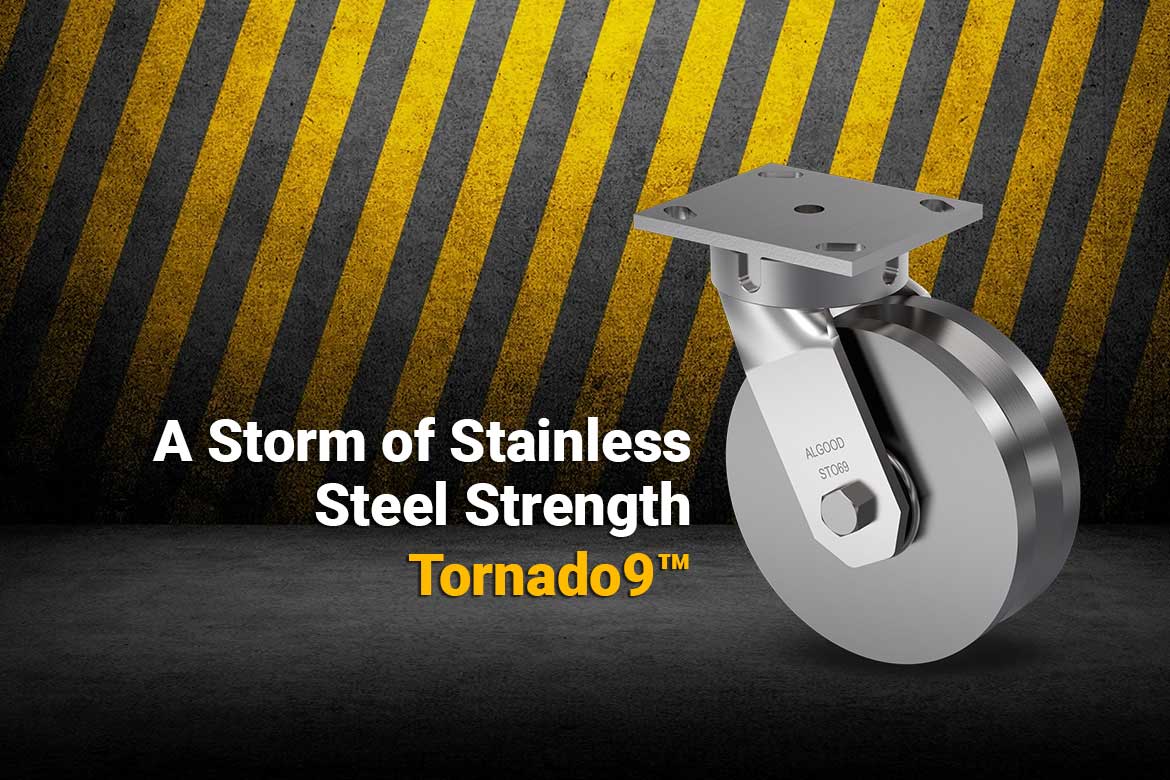
Tornado9™: A Storm of Stainless Steel Strength

Combining North American-made stainless steel with a kingpinless design, the Tornado9™ doesn’t just meet the challenges of heavy-duty, hygienic, and high-performance environments; it creates a storm of advantages and possibilities.

The Tornado9 is forged from SAE 304 stainless steel that’s work-hardened, electro-polished, de-magnetized, and de-burred. Robotically welded and NSF certified, it stands up to intense pressure, extreme conditions, and unforgiving environments. With a capacity of up to 1,500 lbs, it’s virtually indestructible: the only way to break it is to break the weld or the balls in the raceway.

From hospitals to industrial tow lines, the Tornado9 shines where cleanliness, reliability, and strength are essential. It’s ideal for:

  • Hospitals and healthcare environments
  • Pharmaceutical and food processing facilities
  • Moisture-prone or bacteria-free clean spaces
  • High-tech manufacturing
  • Tow lines, industrial platform trucks and heavy-duty stock carts

Available in 4” to 8” diameters and available with a wide variety of stems and plates, the Tornado9 fits your application without compromise. You can make it a complete stainless solution with stainless steel roller bearings, spanner bushings and stainless steel side washers.

If you need extra capacity, check out the available dual-wheel configurations and custom overall heights.

The Tornado9 delivers a quiet, smooth rotation ride. A high-precision screw plug in the raceway eliminates the need for welding while ensuring torque is just right—never too much or too little. With optional brakes (including side-locking, thumb screw, and swivel lock) and multiple bearing types, the Tornado9 adapts to your needs while maintaining superior maneuverability.

With our CAD LAB design space, you can engineer the Tornado9 configuration to meet your application needs down to the last detail. Choose your wheel type, stem style, brake option, and dimensions. The Tornado9 isn’t just built for performance—it’s built for your performance.

Every Tornado9 caster is built in our fully integrated Toronto facility. That means faster lead times, dependable delivery, and North American quality you can trust. And with our 3-Year No-Excuse Warranty™, your investment is protected by the same values that go into every Algood product we make: durability, accountability, and pride in our craft.

The Tornado9™ is a bold statement about what Algood stands for: design-focused engineering, customer-centered support, and family values to deliver mobility solutions that move your business forward. All grounded in the belief that strength and precision should never be compromised.


Algood is proud to manufacture its casters and wheels right here in North America. With our fully integrated manufacturing facility in Toronto, we are leaders in quality and innovation. For more information about Algood Casters, Call: 1-800-254-6633 or Email: Service@Algood.com

1 (800) 254-6633
service@algood.com

Algood Casters has manufactured, designed and developed industrial and specialty casters, brakes and wheels since 1969, in capacities from 25 to 65,000 lbs.